Comparing FIFA World Cup 2026 Stadiums: Facilities, Capacity and Fan Experience
As football fans look forward to the historic tournament across three host nations, Comparing FIFA World Cup 2026 Stadiums: Facilities, Capacity and Fan Experience is essential for understanding how this event will reshape the landscape of global sports. The 2026 edition represents an unprecedented expansion, featuring 48 teams competing in 104 matches across Canada, Mexico, and the United States. To appreciate the scale of this tournament, we must examine the architectural marvels, historic coliseums, and high-tech arenas that will house millions of spectators from around the globe.
Table of Contents
- 1. Overview of the 2026 Host Venues
- 2. East Coast Stadiums Analysis
- 3. South and Midwest Venues Comparison
- 4. West Coast Technological Marvels
- 5. Mexican Heritage & Canadian Charm
- 6. Comprehensive Capacity & Facilities Matrix
- 7. Pitch Technology: The Turf-to-Grass Challenge
- 8. Fan Logistics, Transit, and Accessibility
- 9. Frequently Asked Questions (FAQs)
- 10. Conclusion and Final Thoughts
Comparing FIFA World Cup 2026 Stadiums: Facilities, Capacity and Fan Experience
The selection of the 16 host cities presents a fascinating study in contrast. When Comparing FIFA World Cup 2026 Stadiums: Facilities, Capacity and Fan Experience, the sheer scale of American NFL arenas quickly stands out against the rich, historic background of Mexican stadiums and the highly intimate, urban environments of Canada’s venues. Each region brings a distinct flavor to the tournament, promising a multifaceted experience for visiting supporters.
For instance, the United States has put forward 11 premier stadiums, all of which regularly host NFL franchises. These structures boast vast seating capacities and luxury suites designed to generate maximum commercial revenue. On the other hand, Mexico brings unparalleled football heritage, led by the legendary Estadio Azteca, which has already hosted two World Cup finals. Canada offers scenic, modern urban stadiums that place fans right in the heart of its vibrant cities.
Consequently, navigating this geographic and structural variety requires looking closely at what each venue offers. Whether you are seeking high-capacity grandstands, top-tier VIP hospitality, or the raw emotion of historic terraces, the 2026 venues cater to every standard of modern fan expectation.
Comparing FIFA World Cup 2026 Stadiums: Facilities, Capacity and Fan Experience on the East Coast
The East Coast of the United States plays an incredibly vital role in the tournament, culminating in the highly anticipated final. Consequently, Comparing FIFA World Cup 2026 Stadiums: Facilities, Capacity and Fan Experience in the New York metropolitan area reveals a heavy focus on high-capacity seating and modern commercial amenities.
MetLife Stadium (New York/New Jersey): With a confirmed seating capacity of 82,500, MetLife Stadium has been selected to host the prestigious FIFA World Cup 2026 Final on July 19. Located in East Rutherford, New Jersey, this open-air venue is one of the premier multi-purpose arenas in the country. Its outer skin features customizable aluminum louvers that change color, creating a striking visual impact. While its capacity is enormous, transit logistics have historically posed a minor hurdle, meaning fans should plan their train commutes carefully.
Lincoln Financial Field (Philadelphia): Known locally as “The Linc,” this stadium holds 69,796 spectators. It is highly regarded for its excellent sightlines, robust sustainability initiatives, and local culinary options. Importantly, the venue features wind turbines and thousands of solar panels that generate clean electricity. The fan experience here is energetic, deeply connected to Philadelphia’s passionate sporting culture, and highly accessible via public transit from downtown.
Gillette Stadium (Boston): Situated in Foxborough, Massachusetts, Gillette Stadium features a capacity of 64,146. To prepare for the tournament, the venue underwent a massive renovation, which added a grand new lighthouse structure and the largest outdoor curved video board in the country. However, because it is located approximately 30 miles from Boston, fans will rely heavily on regional commuter rail services or organized shuttles to reach the stadium on match days.
Comparing FIFA World Cup 2026 Stadiums: Facilities, Capacity and Fan Experience in the South and Midwest
Moving inward, the American Heartland and the South showcase stadiums characterized by breathtaking structural engineering and immense scale. Furthermore, when Comparing FIFA World Cup 2026 Stadiums: Facilities, Capacity and Fan Experience, Dallas and Atlanta set the benchmark for modern stadium engineering.
AT&T Stadium (Dallas/Arlington): This stadium is an architectural giant. With a capacity of approximately 94,000 for the World Cup, it is the largest venue in the tournament. It features a massive retractable roof and a center-hung, high-definition video screen that stretches nearly from one 20-yard line to the other. Dallas will host nine matches, including a semifinal, making it a critical hub for the tournament. On the other hand, the suburban location means that public transportation is limited, making rideshares and private shuttles the primary transit options.
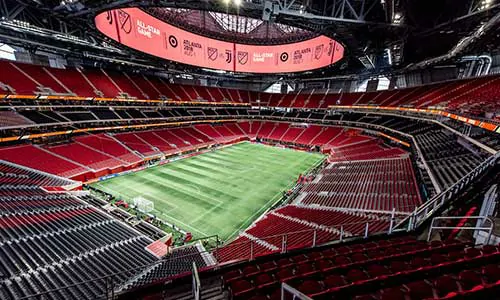
Mercedes-Benz Stadium (Atlanta): This venue is famous for its unique pinwheel-style retractable roof and a 360-degree halo video board that frames the entire pitch. It has a tournament capacity of 68,239 and is scheduled to host the second semifinal. Positioned in downtown Atlanta, this stadium offers outstanding walkability, immediate access to public transit, and highly affordable food and beverage options, making it a fan favorite.
NRG Stadium (Houston): Featuring a retractable roof and a capacity of 72,000, NRG Stadium is a versatile arena with a rich history of hosting major sporting events. The stadium’s indoor air-conditioning system is a major asset, keeping fans and players comfortable during the hot summer months. It is well-integrated with Houston’s METRORail system, allowing for smooth fan transit to and from downtown.
Arrowhead Stadium (Kansas City): Officially known as GEHA Field at Arrowhead Stadium, this legendary open-air venue holds 76,000 fans. While it lacks the high-tech retractable roofs of Dallas or Atlanta, it is famous for its incredible natural grass field and intense crowd acoustics. The fan experience here is heavily focused on traditional tailgating, providing international fans with a unique and authentic taste of American sports culture.
Hard Rock Stadium (Miami): With a capacity of 64,767, Miami’s stadium is designed with a modern canopy that covers 90% of the seating bowl. This canopy protects fans from rain and intense summer sun while keeping the pitch open to the sky. It is highly praised for its upscale clubs, art installations, and diverse, multi-cultural food offerings that reflect Miami’s unique identity.
Comparing FIFA World Cup 2026 Stadiums: Facilities, Capacity and Fan Experience on the West Coast
The West Coast venues represent a blend of breathtaking natural beauty and cutting-edge digital technology. Thus, Comparing FIFA World Cup 2026 Stadiums: Facilities, Capacity and Fan Experience in California and the Pacific Northwest demonstrates how beautiful regional landscapes can integrate with high-tech venues.
SoFi Stadium (Los Angeles/Inglewood): Built at a cost of over $5 billion, SoFi Stadium is a masterpiece of modern architecture. It holds 70,000 spectators and features a translucent ETFE canopy roof that is completely open on the sides. Inside, fans are treated to the “Infinity Screen,” a double-sided 4K video board that hangs elegantly above the pitch. Although SoFi Stadium offers an elite luxury experience, its transit connections are still developing, requiring shuttles from nearby rail lines.
Levi’s Stadium (San Francisco/Santa Clara): Situated in the heart of Silicon Valley, Levi’s Stadium holds 68,500 fans. True to its location, the stadium is highly connected, offering high-speed Wi-Fi and a dedicated mobile app that lets fans order food directly to their seats. Additionally, it features a 27,000-square-foot green roof planted with native species, showcasing a strong commitment to environmental sustainability.
Lumen Field (Seattle): Known as one of the loudest stadiums in North America, Lumen Field holds 69,000 spectators. Its unique design includes two massive canopy roofs that cover most of the stands, trapping crowd noise and creating an intimidating atmosphere. Located adjacent to downtown Seattle, it offers superb public transit options, including light rail and commuter trains, ensuring a highly convenient fan experience.
Comparing FIFA World Cup 2026 Stadiums: Facilities, Capacity and Fan Experience in Mexico and Canada
Moreover, Comparing FIFA World Cup 2026 Stadiums: Facilities, Capacity and Fan Experience in Mexico highlights a fascinating contrast between rich football heritage and modern design. Meanwhile, Canada presents a more intimate, fan-centric environment focused on seamless urban integration.
Estadio Azteca (Mexico City): This legendary stadium holds a capacity of 80,824 for the World Cup. It will make history on June 11, 2026, by hosting the tournament’s opening match, making it the first stadium to host matches in three separate World Cups. To meet modern FIFA requirements, the venue has undergone comprehensive renovations. The fan experience here is legendary, characterized by intense, passionate local support and a deep respect for footballing history.
Estadio BBVA (Monterrey): Often called “The Steel Giant,” this modern stadium holds 51,243 fans. Its stunning architectural design features a sleek aluminum facade that beautifully mirrors the nearby Cerro de la Silla mountain. The stadium offers excellent sightlines and a close-up viewing experience, making it one of the most picturesque venues in the tournament.
Estadio Akron (Guadalajara): With a capacity of 45,664, this venue is shaped like a grass-covered volcano, topped by an elegant, floating white canopy. It is a highly eco-friendly stadium that utilizes rainwater harvesting and natural ventilation. The fan experience here is vibrant, highly family-friendly, and deeply rooted in the proud traditions of Mexican football.
BC Place (Vancouver): Located on the picturesque False Creek inlet, BC Place holds 52,497 fans. It features a state-of-the-art cable-supported retractable roof and a massive center-hung scoreboard. The surrounding area is incredibly walkable, filled with excellent restaurants, parks, and direct public transit links, making it one of the most visitor-friendly venues in North America.
BMO Field (Toronto): Officially referred to as Toronto Stadium for the tournament, this is the most intimate venue with a capacity of 43,036. Located at Exhibition Place, it offers steep stands that bring fans remarkably close to the pitch. It is highly accessible via Toronto’s streetcars and regional commuter trains, offering an authentic, community-oriented football experience.
Comprehensive Capacity and Facilities Matrix
To help you quickly evaluate the key differences across these venues, we have compiled a detailed comparative table. This comparative data is key when Comparing FIFA World Cup 2026 Stadiums: Facilities, Capacity and Fan Experience across different matches and host countries.
| Stadium & Location | Tournament Capacity | Key Facility Highlight | Transit Accessibility |
|---|---|---|---|
| AT&T Stadium (Dallas, USA) | ~94,000 | Massive center-hung screen & retractable roof | Moderate (Rideshare & shuttles) |
| MetLife Stadium (NY/NJ, USA) | 82,500 | Customizable outer louvers (Final Venue) | Good (Direct rail connections) |
| Estadio Azteca (Mexico City, MEX) | 80,824 | Historic 3rd World Cup opening match | Excellent (Metro & light rail) |
| SoFi Stadium (Los Angeles, USA) | 70,000 | 4K Infinity Screen & ETFE canopy roof | Moderate (Shuttles required) |
| Mercedes-Benz Stadium (Atlanta, USA) | 68,239 | 360-degree halo video board & retractable roof | Excellent (Direct subway access) |
| BC Place (Vancouver, CAN) | 52,497 | Cable-supported retractable roof | Excellent (Walkable, Skytrain) |
| BMO Field (Toronto, CAN) | 43,036 | Intimate seating, steep sightlines | Excellent (Streetcars & regional rail) |
Pitch Technology: The Turf-to-Grass Challenge
Indeed, Comparing FIFA World Cup 2026 Stadiums: Facilities, Capacity and Fan Experience requires analyzing how these architectural giants adapt to FIFA’s strict playing surface demands. One of the most significant engineering challenges of this tournament is the grass conversion process.
Many of the top NFL stadiums selected for the tournament—including those in Atlanta, Dallas, Foxborough, Houston, Los Angeles, Seattle, and Vancouver—ordinarily use artificial turf. Because FIFA strictly mandates natural grass for World Cup matches, these venues must temporarily install state-of-the-art grass pitches. This conversion requires advanced under-soil aeration and drainage systems, specialized grow lights, and precise temperature controls to keep the grass healthy under closed domes or unique canopy roofs.
Consequently, the quality of these temporary grass surfaces will be a major talking point. Stadiums that manage this transition smoothly will offer players a consistent, high-performing playing field, while reducing the risk of injuries and maintaining the fast pace of modern football.
Fan Logistics, Transit, and Accessibility
Consequently, Comparing FIFA World Cup 2026 Stadiums: Facilities, Capacity and Fan Experience involves looking at urban transit infrastructure beyond the stadium gates. Getting tens of thousands of fans to a venue is just as important as the amenities waiting for them inside.
In terms of downtown integration, cities like Atlanta, Seattle, Vancouver, and Toronto offer superb subway and light rail networks that drop fans directly outside the stadium gates. This close-knit urban layout allows supporters to enjoy local bars, fan zones, and cultural sights without relying on cars. Additionally, it significantly reduces travel times and eases match-day stress.
In contrast, suburban venues such as Gillette Stadium in Foxborough and AT&T Stadium in Arlington will test fans’ patience. These locations rely heavily on regional commuter rail schedules, organized bus shuttles, or private vehicles. To ensure a seamless trip, fans are strongly encouraged to research transit schedules and book parking or shuttle passes well in advance via authorized platforms like Ticketmaster.
Frequently Asked Questions (FAQs)
Below, we address some of the most pressing questions regarding Comparing FIFA World Cup 2026 Stadiums: Facilities, Capacity and Fan Experience.
Q1: What is the largest stadium hosting matches in the FIFA World Cup 2026?
Answer: AT&T Stadium in Dallas, Texas, is the largest venue hosting matches, featuring a tournament capacity of approximately 94,000 spectators.
Q2: Which stadium will host the FIFA World Cup 2026 Final?
Answer: MetLife Stadium in East Rutherford, New Jersey (representing New York/New Jersey), will host the final on July 19, 2026.
Q3: How does Estadio Azteca compare historically to the US stadiums?
Answer: Estadio Azteca carries unparalleled history, being the first stadium to host matches in three World Cups (1970, 1986, 2026), whereas the US stadiums are mostly modern, multi-purpose NFL venues.
Q4: How are stadiums converting artificial turf to natural grass?
Answer: Venues that normally use turf are installing temporary, high-tech natural grass systems, complete with advanced under-soil irrigation, temperature control, and specialized grow lights to meet FIFA standards.
Q5: Which Canadian stadiums are hosting matches in the 2026 World Cup?
Answer: Canada is represented by BC Place in Vancouver (52,497 capacity) and BMO Field in Toronto (43,036 capacity).
Q6: What kind of fan experience upgrades are being made for the venues?
Answer: Upgrades include massive new high-definition video boards, upgraded connectivity infrastructure, revamped luxury suites, and modernized media facilities to ensure top-tier broadcast and fan comfort.
Conclusion and Final Thoughts
Ultimately, Comparing FIFA World Cup 2026 Stadiums: Facilities, Capacity and Fan Experience shows that the tournament will offer a diverse mosaic of sporting culture. From the historic heights of Estadio Azteca to the cutting-edge luxury of SoFi Stadium and the warm, intimate atmosphere of BMO Field, every venue brings something special to the global stage.
For traveling fans, this vast diversity means that careful, early planning is highly recommended. Understanding stadium capacities, transport networks, and stadium rules will make your World Cup journey much smoother and more enjoyable. As the beautiful game takes over North America, these 16 stadiums are ready to write an exciting new chapter in football history.
Are you planning to travel for the tournament? Start preparing your journey today by researching ticket packages, transit passes, and host city maps on the official FIFA platform to ensure you don’t miss a moment of the action!