Easiest FIFA World Cup 2026 Host Cities to Travel Between
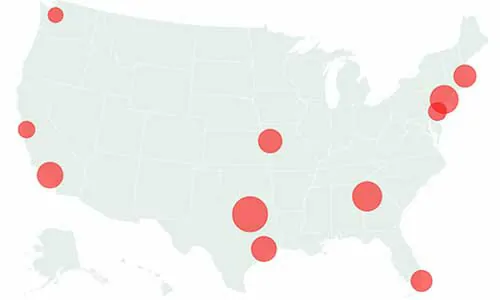
The historic FIFA World Cup 2026 is rapidly approaching, and it is set to be the largest and most expansive sports tournament ever held. Spanning three massive nations—the United States, Canada, and Mexico—this edition of the global tournament features 48 competing national teams playing across 16 different host cities . While the scale of the event promises unparalleled excitement, it also presents significant travel challenges for fans wanting to catch multiple matches in person. Because of the vast distances separating venues, identifying the Easiest FIFA World Cup 2026 Host Cities to Travel Between is crucial for any fan looking to minimize transit hassle and maximize their match-day experience. By strategically planning your trip around cities that offer seamless connectivity, you can easily experience the electric stadium atmospheres without spending your entire budget or vacation time sitting on long-distance flights .
Table of Contents
- Defining the Easiest FIFA World Cup 2026 Host Cities to Travel Between
- The Northeast Corridor: Boston, New York/New Jersey, and Philadelphia
- The Pacific Northwest Hub: Seattle and Vancouver
- The Texas Connection: Dallas and Houston
- Evaluating Local and Regional Transit Options
- Key Strategies to Navigate the Easiest FIFA World Cup 2026 Host Cities to Travel Between
- Summary Comparison of Travel Ease
- How to Handle Cross-Border Travel Smoothly
- Your Ultimate Travel Checklist
- Frequently Asked Questions (FAQ)
Defining the Easiest FIFA World Cup 2026 Host Cities to Travel Between
To help teams and fans manage the vast geography of North America, FIFA has organized the 16 host cities into three regional clusters: Western, Central, and Eastern . Consequently, fans do not need to fly from Vancouver to Miami just to see back-to-back group-stage matches. Instead, focusing on the most tightly grouped clusters allows you to transition smoothly between games using ground transportation, regional trains, or ultra-short flights.
When analyzing transit simplicity, we look closely at three main variables: physical distance, diversity of transport modes (such as trains, highways, and regional flights), and local transit connectivity to the stadiums themselves. Based on these parameters, specific groupings of cities stand out as exceptionally logical. Specifically, the Northeast Corridor of the United States and the Pacific Northwest border region emerge as the absolute top choices for effortless dual-city or tri-city match hopping.
The Northeast Corridor: Boston, New York/New Jersey, and Philadelphia
There is no debate that the Eastern region—specifically the sub-section encompassing Boston, New York/New Jersey, and Philadelphia—stands out as the premier choice. For fans seeking the Easiest FIFA World Cup 2026 Host Cities to Travel Between, this geographic trio offers unparalleled convenience and transit diversity. The entire corridor is linked by a robust, high-frequency passenger rail system, making it the only region where renting a car or booking a flight is completely optional.
Why the Northeast Corridor Features the Easiest FIFA World Cup 2026 Host Cities to Travel Between
Amtrak, the national passenger rail provider in the United States, operates frequent daily services along this route, including the high-speed Acela and the regional Northeast Regional trains . For instance, the journey from Philadelphia to New York City takes just about 1 hour and 10 minutes on a regional train. Similarly, traveling from New York City to Boston takes roughly 3.5 to 4 hours. Because these trains deliver passengers directly to downtown hubs like William H. Gray III 30th Street Station in Philadelphia and Penn Station in New York, you completely bypass the congestion, security lines, and luggage fees associated with airport travel.
Furthermore, the stadiums in these host cities are heavily integrated into local transit frameworks:
- New York/New Jersey (MetLife Stadium): Located in East Rutherford, New Jersey, this massive venue is directly connected to NYC via the NJ Transit rail service. Fans can board a train at Penn Station Manhattan, make a quick, seamless transfer at Secaucus Junction, and arrive right at the stadium gates.
- Philadelphia (Lincoln Financial Field): Positioned in South Philadelphia, the stadium is highly accessible via the SEPTA Broad Street Line metro network . Fans coming from out of town can step off an Amtrak train at 30th Street Station, take a free transfer to the Broad Street Line, and ride directly to NRG Station adjacent to the field .
- Boston (Gillette Stadium): Located in Foxborough, roughly 30 miles southwest of Boston. While not in the city center, the MBTA Commuter Rail operates special, dedicated match-day event trains departing directly from South Station and Back Bay Station in Boston, as well as from Providence, Rhode Island, ensuring fans can reach the venue safely and without the headache of highway traffic.
Consequently, the ease of booking a single multi-city train pass via Amtrak makes this Eastern corridor the most stress-free option for international and domestic travelers alike.
The Pacific Northwest Hub: Seattle and Vancouver
On the West Coast, the physical proximity between Seattle (Lumen Field) and Vancouver (BC Place) represents another highly efficient corridor. These two cities are separated by a mere 143 miles along the scenic Interstate 5 corridor, making them incredibly attractive options for fans focusing on the Western matches.
Are Seattle and Vancouver the Easiest FIFA World Cup 2026 Host Cities to Travel Between on the West Coast?
Yes, they absolutely are. The connection between Seattle and Vancouver offers travelers a rare combination of beautiful Pacific Northwest scenery and multiple efficient transit methods. For instance, the Amtrak Cascades passenger train runs daily between Seattle’s King Street Station and Vancouver’s Pacific Central Station. This highly rated train route takes approximately 4 to 4.5 hours and features comfortable seating, power outlets, and free Wi-Fi, allowing you to relax or work while moving between games.
Additionally, those who prefer driving can easily rent a car and complete the journey in about 2.5 to 3 hours, depending on traffic and border processing times. Importantly, you must prepare for customs checks at the United States-Canada border. However, with multiple crossing points like the Peace Arch or the Pacific Highway crossing, the process is generally straightforward if your travel documents are fully in order.
Once you arrive, both cities offer stellar inner-city transit options:
- Seattle (Lumen Field): Located directly adjacent to downtown Seattle and King Street Station, Lumen Field is arguably the most walkable stadium in the entire tournament. It is fully served by the Sound Transit Link Light Rail, meaning you can easily transit from Seattle-Tacoma International Airport (SEA) directly to the stadium area without ever needing a taxi.
- Vancouver (BC Place): Situated right in the heart of downtown Vancouver, this venue is incredibly easy to reach. The TransLink SkyTrain Expo and Canada Lines drop fans off just a short walk away from the stadium gates, allowing visitors to stay in downtown hotels and walk to the matches.
Therefore, pairing matches in Seattle and Vancouver is highly recommended for fans seeking a seamless, cross-border World Cup adventure.
The Texas Connection: Dallas and Houston
In the Central region, the state of Texas presents a powerful option with Dallas (AT&T Stadium) and Houston (NRG Stadium). While Texas is known for its immense size, the distance between these two specific host cities is only about 240 miles down the Interstate 45 corridor. While not as close as the Northeast Corridor, they still rank among the Easiest FIFA World Cup 2026 Host Cities to Travel Between because of the massive volume of travel options connecting them daily.
Driving between Dallas and Houston takes approximately 3.5 to 4 hours. This makes renting a car with a group of friends a highly affordable and flexible option. For those who prefer to fly, the air corridor between the two metros is incredibly busy. Dozens of daily flights connect Dallas-Fort Worth International Airport (DFW) and Dallas Love Field (DAL) with Houston George Bush Intercontinental (IAH) and William P. Hobby Airport (HOU) in under an hour. Because of this high frequency, ticket prices remain relatively competitive, provided you book well in advance of the tournament rush.
Within the cities, transit experiences differ. Houston’s NRG Stadium is well-connected to the downtown hotel sector via the efficient METRORail Red Line. On the other hand, AT&T Stadium in Arlington lacks a direct mass transit line from downtown Dallas. To address this, local authorities will offer robust match-day express shuttles, and fans can take the Trinity Railway Express train to nearby transit hubs to connect with stadium-bound buses . Despite the local transit differences, the sheer speed of traveling between these two cities makes them a highly viable regional pair.
Evaluating Local and Regional Transit Options
Understanding which transit mode is right for your group is essential when bouncing between matches. Let us break down the primary travel methods you will use to move between these strategic hubs.
Regional Trains: The Stress-Free Standard
For the Northeast Corridor and the Pacific Northwest, passenger rail is easily the most comfortable and reliable way to travel. Trains eliminate the unpredictable traffic of major interstate highways and bypass the long check-in processes of major airports. Furthermore, Amtrak trains feature spacious seating, ample luggage space, and no hidden fees for carry-on items, making them highly budget-friendly for international fans traveling with gear.
Regional Flights: Speed Over Long Distances
While train travel is highly recommended for shorter distances, regional flights are necessary if you want to jump between clusters. Fortunately, major US airports like John F. Kennedy (JFK), Newark Liberty (EWR), Philadelphia (PHL), and Boston Logan (BOS) offer high-frequency shuttle flights. Consequently, if you must travel from the Northeast to the Texas cluster, you can easily find direct flights daily. However, ensure you account for the extra time needed for airport security, baggage claim, and traveling from outlying airports to city centers.
Road Trips and Buses: Ultimate Flexibility
Renting a car or utilizing long-distance bus operators like FlixBus or Greyhound remains a highly economical choice, especially for groups of three or four fans. Driving gives you complete control over your schedule, allowing you to stop at local sights and explore North American culture between games. However, be aware that parking fees at World Cup stadiums will be extremely expensive, and traffic congestion near the venues on match days will be severe. Therefore, we highly advise parking your vehicle at a park-and-ride commuter station outside the city center and using public rail lines for the final leg to the stadium.
Key Strategies to Navigate the Easiest FIFA World Cup 2026 Host Cities to Travel Between
To successfully execute a multi-city World Cup trip, you must look beyond simple map distances. Navigating the Easiest FIFA World Cup 2026 Host Cities to Travel Between requires smart, proactive planning to avoid inflated costs and scheduling conflicts. Here are the top strategies used by veteran sports travelers:
1. Book Your Inter-City Transit First
Do not wait until you arrive in North America to book train tickets or regional flights. High-demand travel windows—especially the days immediately preceding and following major matches—will see trains and flights sell out months in advance. Additionally, rail operators like Amtrak use dynamic pricing, meaning tickets become significantly more expensive as the departure date approaches.
2. Base Yourself Near Regional Transit Hubs
Instead of booking accommodations directly adjacent to the stadium venues, which will command massive premiums, consider staying near central transit hubs. For example, staying near Back Bay in Boston or Center City in Philadelphia allows you to easily walk to Amtrak stations for inter-city travel and hop on commuter lines to reach the stadiums on match days .
3. Travel Light
Whether you are taking the SkyTrain in Vancouver or the subway in New York, navigating busy mass transit systems with oversized suitcases is incredibly stressful. Opt for a single carry-on bag and a compact daypack. This agility allows you to transition straight from a train station or airport directly to a stadium fan zone without needing to check large bags at a hotel first.
Summary Comparison of Travel Ease
Below is a direct comparison of the three most popular regional corridors to help you decide which cluster best fits your tournament itinerary:
| Regional Corridor | Host Cities Included | Primary Transit Method | Avg. Transit Time | Overall Ease Rating |
|---|---|---|---|---|
| Northeast Corridor | Boston, New York/NJ, Philadelphia | Amtrak Train (Acela / Regional) | 1.5 to 4 hours | Outstanding (5/5) |
| Pacific Northwest | Seattle, Vancouver | Amtrak Cascades / Driving (I-5) | 3 to 4.5 hours | Very Good (4.5/5) |
| Texas Triangle | Dallas, Houston | Driving / Regional Flights | 1 hour (flight) / 4 hours (drive) | Good (3.5/5) |
How to Handle Cross-Border Travel Smoothly
If you choose the Pacific Northwest cluster of Seattle and Vancouver, your journey will involve crossing the border between the United States and Canada. While this adds a minor layer of complexity, following basic rules ensures you will experience zero delays.
First, ensure your passport has at least six months of validity remaining from your planned date of departure. Second, check visa requirements well in advance. While citizens of many nations can travel visa-free, they will still require an Electronic System for Travel Authorization (ESTA) for the United States, and an Electronic Travel Authorization (eTA) for Canada . These authorizations must be obtained online prior to boarding your train, bus, or flight. Additionally, if you are traveling via train on the Amtrak Cascades, customs and immigration processing will take place directly at Pacific Central Station in Vancouver or at the border crossing, so prepare your documents to present them clearly to border officials.
Your Ultimate Travel Checklist
To ensure a flawless experience visiting the Easiest FIFA World Cup 2026 Host Cities to Travel Between, verify that you have completed each of these vital preparation steps:
- Transit Bookings: Secure all Amtrak tickets or regional flights at least 3 to 4 months before kickoff.
- Transit Apps: Download local commuter apps on your smartphone, including the SEPTA app (Philadelphia) , the Transit/MBTA app (Boston), and the GoPass app (Dallas) .
- eSIM Configuration: Install a reliable North American eSIM that offers coverage across both the USA and Canada so your mobile data switches networks seamlessly .
- Match Tickets: Keep digital copies of your FIFA match tickets accessible offline in your phone’s digital wallet.
- Refundable Accommodations: Whenever possible, book hotels with free cancellation. This allows you to adjust your travel base quickly if your favorite national team advances to a different city during the knockout rounds .
Conclusion
The FIFA World Cup 2026 is set to be an unforgettable global festival of football. However, the sheer size of North America means smart logistical planning is the true key to a successful tournament. By focusing your itinerary on the Easiest FIFA World Cup 2026 Host Cities to Travel Between, you can avoid long, exhausting travel days and focus fully on the matches. Whether you choose the train-friendly Northeast Corridor, the stunning Pacific Northwest route, or the vibrant Texas highway connections, choosing the right clusters will ensure your trip is highly efficient, affordable, and incredibly fun.
Do not wait until the stadiums begin to fill. Start mapping out your journey, booking your train tickets, and securing your accommodations today to guarantee your spot in this historic sporting journey!
Frequently Asked Questions (FAQ)
Which are the absolute easiest FIFA World Cup 2026 host cities to travel between?
The absolute easiest host cities to travel between are New York/New Jersey, Philadelphia, and Boston. These three cities are situated extremely close to each other along the Northeast Corridor and are linked by high-frequency, reliable passenger trains, meaning you can easily travel between them without renting a car or booking flights.
Can I travel between World Cup host cities by train?
Yes. Train travel is highly feasible in two main regions: the Northeast Corridor (connecting Boston, New York, and Philadelphia via Amtrak) and the Pacific Northwest (connecting Seattle and Vancouver via the Amtrak Cascades train).
Do I need a visa to travel between Seattle and Vancouver matches?
It depends on your nationality. Because Seattle is in the United States and Vancouver is in Canada, you will cross an international border. Most international fans will need an ESTA for the US and an eTA for Canada, or traditional tourist visas, so check official government portals well in advance .
How far apart are Dallas and Houston for World Cup travel?
Dallas and Houston are approximately 240 miles apart. You can travel between them by driving down Interstate 45, which takes about 3.5 to 4 hours, or by booking a short, 1-hour regional flight.
Is local transit available to the stadiums in New York and Philadelphia?
Yes, both stadiums feature direct local transit connections. MetLife Stadium in New Jersey is accessible via NJ Transit trains from Manhattan’s Penn Station, and Lincoln Financial Field in Philadelphia is directly connected to Center City via the SEPTA Broad Street Line metro .