False 9 Explained: Role, Tactical Impact and Legendary Players
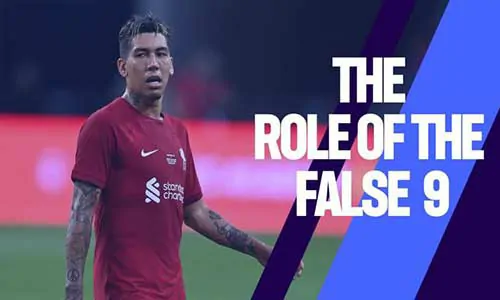
Football is an ever-evolving game of chess where space is the ultimate currency. Among the countless strategic innovations that have transformed the modern game, few roles have captured the imagination of tacticians and fans quite like the deep-lying forward. In this comprehensive guide, we provide a complete False 9 Explained: Role, Tactical Impact and Legendary Players breakdown to understand how this hybrid position revolutionized attacking play. By shifting the traditional boundaries between midfield and attack, this specialized role challenges defensive lines and creates unique opportunities on the pitch.
Table of Contents
- 1. What is a False 9? Defining the Modern Maverick
- 2. How the Position Works: Tactical Mechanics
- 3. Historical Origins: The Ancestors of the Position
- 4. The Barcelona Revolution and the Guardiola Era
- 5. The Tactical Advantages of Deploying a False 9
- 6. Legendary Players of the Modern Era
- 7. Defending Against the False 9: The Coach’s Dilemma
- 8. The Future of the Position: Is the False 9 Fading?
- 9. Key Attacking Principles
- 10. Conclusion and Final Thoughts
- 11. Frequently Asked Questions (FAQ)
1. What is a False 9? Defining the Modern Maverick
To fully grasp the complexity of this position, one must first look at the traditional numbering system in football. Historically, the shirt number nine belonged to the focal point of the attack—the center-forward. This player was responsible for staying high up the pitch, battling physical defenders, and scoring goals. However, the modern game demanded more fluid solutions, leading to the rise of a forward who behaves contrary to expectations.
In contrast to a traditional target man, a deep-lying forward acts as a hybrid player. They start in the traditional center-forward position but consistently drop deep into the midfield area during possession. This movement deliberately leaves the opponent’s defensive line without a direct opponent to mark, creating immense structural chaos. Consequently, the opposition is forced to make immediate and difficult defensive decisions.
This role demands a highly specific set of technical and cognitive skills. A successful practitioner cannot rely solely on physical power or raw speed. Instead, they must possess exceptional spatial awareness, clean first-touch control, and the vision of an elite playmaker. Essentially, this player serves as a bridge, linking the midfield and the forward line into a single cohesive attacking unit.
2. How the Position Works: Tactical Mechanics
The success of this tactic depends heavily on synchronized team movements. When the forward drops deep, the wingers must immediately adapt. Specifically, they must transform from traditional wide players into inside forwards. As the center-backs are drawn forward, the wingers run diagonally into the vacant space behind them. For this reason, a deep-lying forward is highly effective when paired with fast, goal-scoring wingers.
Furthermore, midfield rotations are vital for this system to function. As the forward occupies the space between the opposition’s midfield and defense, it creates a box midfield. This numerical superiority allows the attacking team to dominate possession with ease. Consequently, the opposition is forced to defend in a low block, which minimizes their counter-attacking threat.
In addition, the timing of the forward’s drop is crucial. If they drop too early, the center-backs will not follow them, and the midfield becomes congested. If they drop too late, the passing lane is blocked. Therefore, the player must constantly scan the pitch to identify the right moment to vacate the front line. Through this constant movement, they disrupt the defensive organization and make it difficult for the opposition to employ a strict man-marking scheme.
3. Historical Origins: The Ancestors of the Position
While many modern fans associate this role with modern coaching, its roots extend back to the early 20th century. For instance, in the 1930s, the legendary Austrian national team utilized Matthias Sindelar in a very similar fashion. Sindelar, known as “The Paper Man” due to his slight build, avoided physical battles with physical defenders. Instead, he dropped deep to link play, allowing his teammates to exploit the spaces he vacated.
Subsequently, the Hungarian national team of the 1950s refined this concept. Under coach Gusztáv Sebes, Nándor Hidegkuti was deployed as a deep-lying center-forward in their famous W-M formation. This tactical masterstroke caught traditional English defenses completely off guard. Most notably, during Hungary’s historic 6-3 victory over England at Wembley in 1953, the English center-backs did not know how to handle Hidegkuti’s deep positioning. Consequently, he was allowed to dictate the game, scoring a hat-trick.
Later, in the early 2000s, Luciano Spalletti revived this approach at AS Roma. Due to an injury crisis, Spalletti deployed playmaker Francesco Totti as a lone forward in a fluid 4-6-0 formation. Totti’s incredible vision and passing ability allowed Roma to dominate the midfield, while his natural instinct kept him highly prolific. Therefore, Spalletti’s experiment served as the immediate tactical bridge to the modern era, setting the stage for subsequent tactical adaptations.
False 9 Explained: Role, Tactical Impact and Legendary Players in Early Tactics
To truly grasp how these early systems worked, one must understand the defensive structures of those eras. Traditionally, defenses used strict man-marking. When Matthias Sindelar or Nándor Hidegkuti dropped deep, they dragged their designated markers with them. In doing so, they created massive chasms in the defensive structure.
Furthermore, this tactical evolution highlights how the role was born out of necessity rather than mere aesthetic preference. Coaches realized that physical superiority could be overcome by intellectual movement. Consequently, the initial iterations of this deep-lying role laid the foundation for modern spatial analysis. By understanding these historic roots, we can see how the modern interpretation of the role is a direct continuation of these early pioneering tactics.
4. The Barcelona Revolution and the Guardiola Era
The true global renaissance of this position occurred in May 2009 during an iconic El Clásico match. Ahead of Barcelona’s visit to the Santiago Bernabéu, manager Pep Guardiola made a tactical decision that would change football history. He moved Lionel Messi from the right wing to the center of the pitch, instructing him to drop deep into midfield.
Consequently, this tactical shift completely overwhelmed Real Madrid’s defensive line. The central defenders were left in a state of constant indecision. If they followed Messi, they left spaces for Samuel Eto’o and Thierry Henry to exploit. If they stayed deep, Messi had a free path to run at the defense. As a result, Barcelona secured a historic 6-2 victory, and the modern interpretation of the deep-lying playmaker-forward was officially born.
False 9 Explained: Role, Tactical Impact and Legendary Players during the Guardiola Era
During this golden era, Lionel Messi illustrated how an elite player could master this complex role. Under Pep Guardiola, Barcelona’s style required absolute control of the midfield. By utilizing Messi centrally, they consistently enjoyed a numerical advantage in the middle of the pitch. For detailed analysis on Pep’s tactical setups, you can explore the archives at UEFA.
In addition, Messi’s dribbling ability made him dangerous when facing the opposition defense. Once he received the ball between the lines, he could either thread a precise pass to an overlapping winger or dribble past defenders himself. Consequently, this tactical framework allowed Messi to score an unprecedented number of goals. Therefore, this system proved that a team does not need a physical focal point to be highly productive in front of goal.
5. The Tactical Advantages of Deploying a False 9
Deploying a deep-lying forward offers several distinct tactical advantages. Firstly, it facilitates superior possession retention. By adding an extra body to the midfield, the attacking team can easily bypass high-pressing systems. In other words, they almost always have an open passing lane to escape pressure.
Secondly, it enhances defensive stability during transition phases. Because the forward is positioned closer to the midfield, they can immediately participate in counter-pressing when possession is lost. This helps congest the center of the pitch and prevents the opposition from launching rapid counter-attacks.
Furthermore, this setup allows wide players to maximize their goal-scoring output. In traditional systems, wingers are expected to cross the ball to a central target man. However, with a deep-lying forward, wingers can make diagonal runs into the penalty box, acting as the primary goal-scorers. This creates an unpredictable attack, as defenders cannot easily identify who to mark.
| Feature / Attribute | Traditional Number 9 | False 9 |
|---|---|---|
| Primary Position | Stays high, occupies center-backs inside the box | Drops deep into the space between defense and midfield |
| Main Objective | Finishing chances, physical duels, aerial threat | Creating space, linking play, overload midfield |
| Key Skills Required | Strength, positioning, heading, clinical finishing | Vision, passing, tight space dribbling, spatial awareness |
| Impact on Wingers | Provide crosses and support from wide areas | Cut inside diagonally to act as main goal-scorers |
6. Legendary Players of the Modern Era
While Lionel Messi remains the most famous example, several other modern masters have utilized this position to achieve success. For instance, Roberto Firmino was the cornerstone of Jürgen Klopp’s successful Liverpool side. Although Mohamed Salah and Sadio Mané scored the majority of the goals, it was Firmino’s selfless movement that made their attacks functional. By dropping deep, Firmino dragged opposing defenders out of position, leaving wide corridors for his teammates to exploit.
Similarly, Cesc Fàbregas played this role for the Spanish national team during their victorious Euro 2012 campaign. Under Vicente del Bosque, Spain opted to play without a recognized striker, fielding Fàbregas centrally in a 4-6-0 setup. This tactical choice allowed Spain to control possession completely, starving opponents of the ball and winning the tournament.
Additionally, Karim Benzema developed a highly sophisticated hybrid style at Real Madrid. While he was a natural number nine, his willingness to drift wide and drop deep allowed wide forwards to cut inside and dominate the scoring. Consequently, Benzema’s tactical flexibility proved that even a traditional forward could adapt their game to incorporate these deep-lying principles.
False 9 Explained: Role, Tactical Impact and Legendary Players in Contemporary Football
In contemporary football, we see managers constantly adapting this concept to counter modern defensive setups. For example, coaches frequently use technical midfielders or versatile forwards in this capacity to disrupt teams that utilize a low block. For a detailed tactical breakdown of contemporary player roles, you can visit Coaches’ Voice.
Furthermore, this contemporary adaptation shows that the role is not static. It continues to evolve as defensive systems become more organized and athletic. By studying these contemporary practitioners, we can understand how the role is no longer a luxury but a fundamental tactical option for modern elite teams. Consequently, understanding this evolution is essential for anyone wishing to analyze modern football match dynamics.
7. Defending Against the False 9: The Coach’s Dilemma
Defending against a team utilizing a deep-lying forward is one of the most difficult challenges for any coach. Because the position exploits the spaces between lines, it breaks the standard defensive structures. Consequently, managers must choose between two main defensive approaches.
The first option is to employ a strict zonal marking system. In this setup, center-backs refuse to follow the forward when they drop deep. Instead, they pass the marking responsibility to the defensive midfielders. However, this approach requires impeccable communication. If the defensive midfielder is already occupied with an opposing playmaker, the forward will have too much time to turn and pick a pass.
On the other hand, the second option is to have a center-back aggressively follow the forward into the midfield. This is a high-risk strategy. While it prevents the forward from turning easily, it leaves a massive space in the defensive line. Fast, intelligent wingers can easily exploit this gap with diagonal runs. Therefore, modern coaches often opt for a double-pivot system to block the passing lanes into the center, effectively suffocating the space.
8. The Future of the Position: Is the False 9 Fading?
In recent seasons, we have witnessed a noticeable shift back toward traditional, physical strikers. The rise of players like Erling Haaland and Victor Osimhen suggests that the era of the pure playmaker-forward might be undergoing a transition. Consequently, many tactical analysts are asking whether this specialized role is fading from the modern game.
However, it is more accurate to view this as a cyclical tactical evolution. As defensive lines have become more athletic and compact, the space in the midfield has shrunk. Therefore, having a physical presence who can pin defenders and score from minimal chances has once again become highly valuable.
In addition, the principles of the position have been absorbed into other roles. Modern wingers and attacking midfielders now regularly drop into these half-spaces to link play. Thus, while we may see fewer teams fielding a pure, dedicated deep-lying forward, the tactical legacy of the position remains deeply embedded in modern football philosophy.
False 9 Explained: Role, Tactical Impact and Legendary Players — Summary of Key Concepts
To summarize, the position is defined by several core characteristics that distinguish it from traditional attacking roles. Understanding these key elements is crucial for recognizing how the system operates during a match:
- Spatial Awareness: The ability to locate and exploit spaces between the opposition’s midfield and defensive lines.
- Midfield Overload: Creating a numerical superiority to facilitate possession retention.
- Defensive Disruption: Pulling center-backs out of position to create channels for inside forwards.
- Playmaking Proficiency: The capacity to deliver precise through-balls while under intense physical pressure.
Furthermore, these core components illustrate why the role remains one of the most intellectually demanding positions on the football pitch. It requires players to blend tactical discipline with individual brilliance to unlock tight defenses.
10. Conclusion and Final Thoughts
In conclusion, the deep-lying forward has played an instrumental role in shaping the modern tactical landscape. By merging the duties of an elite playmaker with the instincts of a natural striker, it challenged traditional defensive models and ushered in an era of fluid, possession-based football. From the early experiments of Matthias Sindelar to the revolutionary Barca era of Lionel Messi, this role has proven to be a masterclass in spatial manipulation.
What do you think is the future of this position? Do you prefer a traditional target man or a fluid, deep-lying playmaker leading your team’s attack? Let us know your thoughts in the comments below, and don’t forget to share this article with your fellow football enthusiasts! Keep exploring the tactical evolution of the beautiful game to stay ahead of the curve.
11. Frequently Asked Questions (FAQ)
What is the difference between a False 9 and an Attacking Midfielder (No. 10)?
While both roles operate in similar spatial areas, their starting positions differ. An attacking midfielder starts behind a striker, whereas a deep-lying forward (False 9) starts as the highest central forward and drops deep, meaning they still lead the press and finish attacking plays.
Why did Pep Guardiola use Lionel Messi in this role?
Guardiola moved Messi centrally to create a numerical advantage (overload) in midfield, allowing Barcelona to dominate possession. This movement also dragged opposition center-backs out of position, creating spaces for wide forwards.
Can any striker play as a False 9?
No. The role requires unique technical skills, tight space dribbling, exceptional passing vision, and high spatial intelligence. Traditional strikers who rely solely on physical strength or running behind defenses will struggle.
How do you counter a team that plays with a False 9?
Defensive teams often employ a compact low block or a double-pivot midfield to deny the player space. Defenders must coordinate zonal handovers instead of letting center-backs be dragged out of position.
Who was the first False 9 in football history?
The tactical concept dates back to the 1930s with Matthias Sindelar of Austria, and was later refined in the 1950s by Nándor Hidegkuti of the Hungarian national team.
Is the False 9 role extinct in modern football?
No. While many teams have returned to physical strikers to counter deep defenses, the tactical principles of spatial manipulation, deep dropping, and winger rotation remain highly active in modern football.