FIFA World Cup 2026 Schedule: Match Dates, Groups and Kick-Off Times
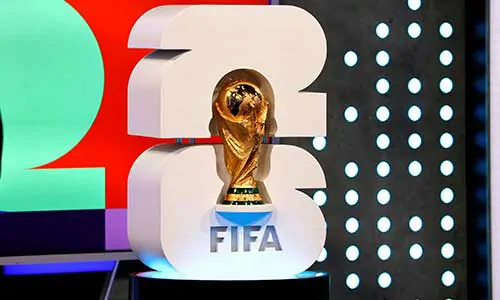
The global football community is currently witnessing history unfold as the 2026 tournament electrifies fans across the globe. Spanning three massive host nations—the United States, Canada, and Mexico—this edition marks the largest and most ambitious in the history of the sport. Navigating this massive expansion can be overwhelming for even the most dedicated fans. Therefore, having a reliable guide is absolutely essential to stay on top of the fixtures. To help you navigate every single game, this article provides the complete FIFA World Cup 2026 Schedule: Match Dates, Groups and Kick-Off Times so you can plan your viewing experience down to the minute.
In addition to expanding to three host nations, this tournament is the first to feature 48 teams. Consequently, the format has been adjusted to feature 104 matches, up from the traditional 64. This means soccer enthusiasts get more drama, more goals, and more high-stakes matches than ever before. To help you keep track of this global spectacle, we have compiled everything you need to know in one accessible place.
Below, you will find a detailed table of contents to help you jump directly to the sections that interest you the most.
Table of Contents
- 1. The Complete FIFA World Cup 2026 Schedule: Match Dates, Groups and Kick-Off Times Breakdown
- 2. Group Stage Dynamics in the FIFA World Cup 2026 Schedule: Match Dates, Groups and Kick-Off Times
- 3. Knockout Stage Progression: FIFA World Cup 2026 Schedule: Match Dates, Groups and Kick-Off Times Explained
- 4. 16 Host Cities & Epic Stadiums Across North America
- 5. How to Stream and Keep Up with the FIFA World Cup 2026 Schedule: Match Dates, Groups and Kick-Off Times
- 6. Frequently Asked Questions (FAQ)
The Complete FIFA World Cup 2026 Schedule: Match Dates, Groups and Kick-Off Times Breakdown
To fully grasp the flow of the tournament, it helps to understand the schedule’s structural breakdown. The event runs from June 11 to July 19, 2026, taking place during the traditional Northern Hemisphere summer window. This duration provides ample breathing room for player recovery despite the increased volume of games.
The schedule is divided into distinct, structured phases, ensuring a steady escalation of tension. Below is a high-level summary of the tournament timeline:
| Tournament Phase | Start Date | End Date | Number of Matches |
|---|---|---|---|
| Group Stage | June 11, 2026 | June 27, 2026 | 72 matches |
| Round of 32 | June 28, 2026 | July 3, 2026 | 16 matches |
| Round of 16 | July 4, 2026 | July 7, 2026 | 8 matches |
| Quarter-finals | July 9, 2026 | July 11, 2026 | 4 matches |
| Semi-finals | July 14, 2026 | July 15, 2026 | 2 matches |
| Bronze Final (Third-Place Play-off) | July 18, 2026 | July 18, 2026 | 1 match |
| World Cup Final | July 19, 2026 | July 19, 2026 | 1 match |
Furthermore, because the tournament is spread across multiple time zones, organizing the schedule required careful geographical clustering. This conscious design minimizes the travel burden on squads, ensuring players remain in peak physical condition. Meanwhile, the FIFA World Cup 2026 Schedule: Match Dates, Groups and Kick-Off Times guarantees that fans across different continents can watch games at highly accessible hours.
From the opening match in Mexico City’s historic Estadio Azteca to the final in New Jersey, every location brings its unique footballing flavor. Next, let’s explore how the first major phase of this massive event is organized.
Group Stage Dynamics in the FIFA World Cup 2026 Schedule: Match Dates, Groups and Kick-Off Times
The group stage is the foundation of the entire tournament, running from June 11 to June 27, 2026. This phase features 12 groups of 4 teams each, designated from Group A to Group L. Because of this structural shift, the top two teams from each group, along with the eight best third-place finishers, advance to the knockout rounds.
Consequently, every group stage match is highly contested, as goal difference and total points play a massive role in securing qualification. To maintain transparency and keep readers informed, let’s take a look at the composition of the groups that have made this tournament so exciting:
- Group A: Mexico, South Africa, South Korea, Czechia
- Group B: Canada, Bosnia and Herzegovina, Qatar, Switzerland
- Group C: Brazil, Morocco, Scotland, Haiti
- Group D: United States, Paraguay, Australia, Türkiye
- Group E: Germany, Curaçao, Ivory Coast, Ecuador
- Group F: Netherlands, Japan, Sweden, Tunisia
- Group G: Belgium, Egypt, Iran, New Zealand
- Group H: Spain, Cape Verde, Uruguay, Saudi Arabia
- Group I: France, Senegal, Iraq, Norway
- Group J: Argentina, Algeria, Austria, Jordan
- Group K: Portugal, Congo DR, England, Croatia
- Group L: Ghana, Panama, and other top-tier competitors
On the other hand, managing kick-off times across Pacific, Central, and Eastern time zones is a complex task. Most matches are scheduled to kick off in the afternoon and evening blocks, specifically at 12:00 PM, 3:00 PM, 6:00 PM, and 9:00 PM Eastern Time (ET). This strategic arrangement ensures a balanced broadcast schedule for global audiences.
For instance, high-profile fixtures such as the opening matchday featured Mexico vs. South Africa in Mexico City at 3:00 PM ET. Additionally, the USA kicked off its campaign against Paraguay in Los Angeles at 9:00 PM ET, providing prime-time television entertainment across the continent. Such scheduling decisions highlight the deep attention paid to the FIFA World Cup 2026 Schedule: Match Dates, Groups and Kick-Off Times.
Knockout Stage Progression: FIFA World Cup 2026 Schedule: Match Dates, Groups and Kick-Off Times Explained
Once the dust settles on the group stage, the tournament shifts into a direct, single-elimination battle. In this section, we examine how the knockout brackets are organized according to the official FIFA World Cup 2026 Schedule: Match Dates, Groups and Kick-Off Times. The introduction of the Round of 32 means there is absolutely no margin for error.
The single-elimination phase begins with the Round of 32, which runs from June 28 to July 3, 2026. This extra round heightens the stakes dramatically, as 32 teams are instantly cut down to 16. Highly anticipated matchups, such as South Africa taking on Canada at SoFi Stadium in Los Angeles, are set to define the opening days of this phase.
Following the Round of 32, the remaining 16 teams will advance to the Round of 16, scheduled from July 4 to July 7, 2026. These matches are strategically placed in world-class facilities like the Mercedes-Benz Stadium in Atlanta and BC Place in Vancouver, ensuring a grand stage for these high-stakes encounters.
Subsequently, the survival of the fittest continues with the following phases:
- Quarter-finals (July 9–11, 2026): Taking place in Boston, Los Angeles, Miami, and Kansas City. These four matches decide which nations enter the final four.
- Semi-finals (July 14–15, 2026): Hosted in Dallas and Atlanta. These fixtures are historically some of the most emotional and closely fought in all of sports.
- Bronze Final (July 18, 2026): Hosted at the Hard Rock Stadium in Miami, this match determines which country walks away with the third-place honors.
- World Cup Final (July 19, 2026): The pinnacle of the sport will take place at the New York New Jersey Stadium (MetLife Stadium) in East Rutherford. Kick-off is set for the afternoon, attracting billions of viewers worldwide.
Therefore, understanding the progression of these dates is vital for fans who wish to plan their watch parties or purchase tickets. The knockout stage of the FIFA World Cup 2026 Schedule: Match Dates, Groups and Kick-Off Times promises unmatched excitement as teams fight for immortality.
16 Host Cities & Epic Stadiums Across North America
An essential aspect of the FIFA World Cup 2026 Schedule: Match Dates, Groups and Kick-Off Times is the distribution of matches across 16 different host cities. These venues are divided into three distinct regions—East, Central, and West—to keep travel logical and manageable.
To give you a better sense of where the drama unfolds, here is the complete list of host cities and their legendary stadiums:
| Host Country | Host City | Stadium Name |
|---|---|---|
| United States | Atlanta | Mercedes-Benz Stadium |
| Boston | Gillette Stadium | |
| Dallas | AT&T Stadium | |
| Houston | NRG Stadium | |
| Kansas City | Arrowhead Stadium | |
| Los Angeles | SoFi Stadium | |
| Miami | Hard Rock Stadium | |
| New York / New Jersey | MetLife Stadium | |
| Philadelphia | Lincoln Financial Field | |
| San Francisco Bay Area | Levi’s Stadium | |
| Seattle | Lumen Field | |
| Mexico | Guadalajara | Estadio Akron |
| Mexico City | Estadio Azteca | |
| Monterrey | Estadio BBVA | |
| Canada | Toronto | BMO Field |
| Vancouver | BC Place |
Furthermore, because of the massive distances, teams are assigned to regional clusters during the early stages of the competition. This logical approach keeps cross-country travel to a minimum until the latter phases of the knockout rounds. As a result, both players and traveling supporters can enjoy a more organized, less stressful tournament experience.
How to Stream and Keep Up with the FIFA World Cup 2026 Schedule: Match Dates, Groups and Kick-Off Times
Staying connected with the action requires a solid understanding of where to watch. Fortunately, the broadcast landscape for this tournament is incredibly robust. If you reside in the United States, FOX Sports holds the English-language broadcast rights, while Telemundo provides high-quality Spanish coverage. Consequently, you can stream matches directly through the FOX Sports App, Peacock, or major streaming platforms like FuboTV.
For fans in Canada, the matches are widely distributed across TSN and CTV networks. Meanwhile, Mexican viewers can tune in via TelevisaUnivision and its designated streaming services. If you are located outside North America, you can check the official broadcasting guidelines directly on the Official FIFA Website to find your local partner.
In addition, using the official FIFA+ application allows fans to track live stats, heat maps, and play-by-play updates. If you enjoy checking match analysis, detailed statistics, and post-game reviews, we highly recommend checking out the comprehensive hub on FOX Sports World Cup Hub. Keeping these links bookmarked ensures you are always in the loop.
Ultimately, keeping a close eye on the FIFA World Cup 2026 Schedule: Match Dates, Groups and Kick-Off Times is your passport to an unforgettable summer of soccer. Whether you are a casual observer or a die-hard fan, this historic 48-team expansion is a tournament you do not want to miss.
As the tournament progresses toward the grand finale in East Rutherford, which team do you think will walk away with the golden trophy? Let us know your predictions in the comments section below, and share this guide with your fellow soccer lovers!
Frequently Asked Questions (FAQ)
To help you quickly find precise details, here are answers to some of the most common questions surrounding the FIFA World Cup 2026 Schedule: Match Dates, Groups and Kick-Off Times.
Q1: What are the start and end dates of the 2026 FIFA World Cup?
A: The tournament officially kicks off on June 11, 2026, and concludes with the grand final on July 19, 2026.
Q2: How many teams are participating in the tournament?
A: For the first time in history, the tournament has expanded to feature 48 teams, playing a total of 104 matches.
Q3: Where is the final match of the 2026 World Cup scheduled to be played?
A: The final will take place at the New York New Jersey Stadium (MetLife Stadium) in East Rutherford, New Jersey, on July 19, 2026.
Q4: What are the standard kickoff times for the matches?
A: Kickoff times are generally distributed throughout the day, primarily at 12:00 PM, 3:00 PM, 6:00 PM, and 9:00 PM Eastern Time (ET).
Q5: Which stadium will host the opening match of the tournament?
A: The opening match took place on June 11, 2026, at the historic Estadio Azteca in Mexico City, Mexico.
Q6: How many host cities are there in total across the three nations?
A: There are 16 host cities in total: 11 in the United States, 3 in Mexico, and 2 in Canada.