FIFA World Cup 2026 Stadium Guide: Locations, Capacities and Key Facts
As the global football community turns its attention to North America for the most expansive tournament in soccer history, navigating the venues of this tri-nation spectacle requires a detailed blueprint. Whether you are traveling across borders or watching from home, this comprehensive FIFA World Cup 2026 Stadium Guide: Locations, Capacities and Key Facts is designed to provide you with everything you need to know. Spanning three countries—Canada, Mexico, and the United States—the tournament features 48 teams competing in 16 world-class venues. Let’s explore the massive arenas and historic stages hosting the world’s greatest game.
Table of Contents
- Why This FIFA World Cup 2026 Stadium Guide: Locations, Capacities and Key Facts Matters
- FIFA World Cup 2026: Tournament Overview
- The Official FIFA World Cup 2026 Stadium Guide: Locations, Capacities and Key Facts for All 16 Venues
- United States Venues (11 Stadiums)
- Mexico Venues (3 Stadiums)
- Canada Venues (2 Stadiums)
- Using the FIFA World Cup 2026 Stadium Guide: Locations, Capacities and Key Facts for Travel Planning
- Conclusion & Call to Action
- Frequently Asked Questions (FAQs)
Why This FIFA World Cup 2026 Stadium Guide: Locations, Capacities and Key Facts Matters
The 2026 edition of the World Cup represents a monumental shift in international soccer. By expanding the tournament to 48 teams, FIFA has increased the matches from 64 to 104, making venue logistics and stadium configurations more critical than ever. Consequently, understanding where matches take place, the seating capabilities, and the distinct features of each arena helps fans and travelers maximize their tournament experience.
Furthermore, several stadiums that usually utilize artificial turf have undergone extensive temporary natural grass installations to comply with strict FIFA regulations. This logistical feat has altered field dimensions and seating capacities. Therefore, having a verified, up-to-date guide ensures you stay informed on the exact layouts of these world-class facilities during the event.
Additionally, because the stadiums are scattered across four different time zones and three distinct national cultures, travel planning can be highly complex. This detailed FIFA World Cup 2026 Stadium Guide: Locations, Capacities and Key Facts serves as your starting point, highlighting not only stadium capacities but also local transportation and historic highlights for each host city.
FIFA World Cup 2026: Tournament Overview
The 2026 tournament marks the first time that three nations—the United States, Mexico, and Canada—have co-hosted the tournament. While Mexico previously hosted in 1970 and 1986, and the United States hosted in 1994, Canada is celebrating its first time hosting the men’s tournament. Ultimately, this collaborative effort has produced some of the most spectacular, high-capacity match locations ever seen in sport.
Below is a summary table showcasing all 16 host stadiums, their official FIFA tournament names, location, and tournament capacity for quick reference:
| Stadium (FIFA Name) | Host City & Country | Tournament Capacity | Key Highlight |
|---|---|---|---|
| Dallas Stadium (AT&T Stadium) | Arlington, Texas, USA | 94,000 | Largest overall capacity; hosting high-profile knockout rounds. |
| Mexico City Stadium (Estadio Azteca) | Mexico City, Mexico | 83,000 | Historic venue hosting the opening match of the tournament. |
| New York New Jersey Stadium (MetLife Stadium) | East Rutherford, New Jersey, USA | 82,500 | Selected as the prestigious venue for the World Cup Final. |
| Atlanta Stadium (Mercedes-Benz Stadium) | Atlanta, Georgia, USA | 75,000 | Retractable pinwheel roof and a 360-degree halo video board. |
| Kansas City Stadium (Arrowhead Stadium) | Kansas City, Missouri, USA | 73,000 | Renowned open-air atmosphere and legendary acoustics. |
| Houston Stadium (NRG Stadium) | Houston, Texas, USA | 72,000 | Retractable roof with extensive experience hosting massive matches. |
| San Francisco Stadium (Levi’s Stadium) | Santa Clara, California, USA | 71,000 | Eco-friendly venue with a sustainable living roof. |
| Los Angeles Stadium (SoFi Stadium) | Inglewood, California, USA | 70,000 | Host of the US Men’s National Team (USMNT) opening match. |
| Philadelphia Stadium (Lincoln Financial Field) | Philadelphia, Pennsylvania, USA | 69,000 | Powered by wind turbines and over 11,000 solar panels. |
| Seattle Stadium (Lumen Field) | Seattle, Washington, USA | 69,000 | Renowned fan energy and unique overhanging acoustics. |
| Boston Stadium (Gillette Stadium) | Foxborough, Massachusetts, USA | 65,000 | Features the tallest lighthouse monument in the United States. |
| Miami Stadium (Hard Rock Stadium) | Miami Gardens, Florida, USA | 65,000 | Open-air design featuring a tensioned shade canopy. |
| BC Place Vancouver | Vancouver, British Columbia, Canada | 54,000 | Stunning cable-supported retractable roof in a waterfront setting. |
| Monterrey Stadium (Estadio BBVA) | Guadalupe, Nuevo León, Mexico | 53,500 | Nicknamed “The Steel Giant” with breathtaking mountain views. |
| Guadalajara Stadium (Estadio Akron) | Zapopan, Jalisco, Mexico | 48,000 | Eco-architectural marvel resembling a grass-covered volcano. |
| Toronto Stadium (BMO Field) | Toronto, Ontario, Canada | 45,000 | The most intimate, soccer-specific layout of the tournament. |
The Official FIFA World Cup 2026 Stadium Guide: Locations, Capacities and Key Facts for All 16 Venues
Every host city and venue chosen for the 23rd edition of the World Cup has been carefully selected to accommodate massive crowds and handle rigorous logistical demands. In this section, we break down each region individually. By highlighting key facts and specific stadium details, we give you a direct insight into the places where history is currently being written.
United States Venues (11 Stadiums)
The United States boasts the largest share of stadiums for the tournament, hosting 11 of the 16 total venues. Each of these locations is primarily used for National Football League (NFL) games but has been modified to support elite-level soccer. To help you navigate these legendary locations, our FIFA World Cup 2026 Stadium Guide: Locations, Capacities and Key Facts details each venue below.
1. New York New Jersey Stadium (MetLife Stadium)
- Location: East Rutherford, New Jersey
- Tournament Capacity: 82,500
- Key Facts: MetLife Stadium is set to host the highly-anticipated final on July 19, 2026. Because it is positioned just across the Hudson River from New York City, it offers easy transport access via mass transit. To meet FIFA standards, the stadium installed a sophisticated natural grass pitch over its usual synthetic surface, providing optimal playing conditions.
2. Dallas Stadium (AT&T Stadium)
- Location: Arlington, Texas
- Tournament Capacity: 94,000
- Key Facts: Boasting the largest seating capacity of the tournament, AT&T Stadium features a massive retractable roof and a center-hung high-definition video board. The venue hosts multiple high-stakes knockout rounds. Meanwhile, specialized LED lighting has been configured to optimize global broadcasts.
3. Los Angeles Stadium (SoFi Stadium)
- Location: Inglewood, California
- Tournament Capacity: 70,000
- Key Facts: As one of the most technologically advanced sports facilities in the world, SoFi Stadium was selected to host the opening match for the US Men’s National Team (USMNT). Its unique translucent canopy roof and dual-sided infinity screen provide an immersive environment for fans. However, because of its initial narrow field dimensions, minor seating adjustments were implemented to fit the standard FIFA-sized grass field.
4. Atlanta Stadium (Mercedes-Benz Stadium)
- Location: Atlanta, Georgia
- Tournament Capacity: 75,000
- Key Facts: This architectural masterpiece features a unique retractable pinwheel roof and a massive 360-degree halo board wrapping around the stadium’s rim. While it normally uses turf for Atlanta United MLS matches, FIFA’s strict turf-to-grass conversions were successfully executed prior to the opening kickoff.
5. Boston Stadium (Gillette Stadium)
- Location: Foxborough, Massachusetts
- Tournament Capacity: 65,000
- Key Facts: Steeped in both MLS and international soccer history, Gillette Stadium underwent major renovations leading up to the tournament, including the construction of a brand-new, ultra-tall lighthouse monument in the north end zone. It serves as a major hub for East Coast matches.
6. Houston Stadium (NRG Stadium)
- Location: Houston, Texas
- Tournament Capacity: 72,000
- Key Facts: NRG Stadium was the first facility in the NFL to feature a fully retractable fabric roof. Consequently, it offers climate-controlled comfort during the hot summer months. It is strategically situated near major transit routes, allowing for rapid movement of visitors.
7. Kansas City Stadium (Arrowhead Stadium)
- Location: Kansas City, Missouri
- Tournament Capacity: 73,000
- Key Facts: Famous for holding the world record for loudest crowd roar, Arrowhead Stadium brings unmatched raw noise and crowd intensity to the World Cup. It is an open-air, double-bowl stadium that has stood as a crown jewel of Midwestern sports culture for decades.
8. Miami Stadium (Hard Rock Stadium)
- Location: Miami Gardens, Florida
- Tournament Capacity: 65,000
- Key Facts: This venue is a global sports icon, having hosted Formula 1, tennis tournaments, and several high-profile international friendlies. Its unique open-air design features a tensioned shade canopy that protects the majority of the seating bowl while keeping the field fully open to daylight.
9. Philadelphia Stadium (Lincoln Financial Field)
- Location: Philadelphia, Pennsylvania
- Tournament Capacity: 69,000
- Key Facts: Renowned for its focus on environmental sustainability, Lincoln Financial Field produces its own green energy via wind turbines and over 11,000 solar panels. The stadium offers excellent sightlines and is deeply integrated into the rich sports tradition of Philadelphia.
10. San Francisco Stadium (Levi’s Stadium)
- Location: Santa Clara, California
- Tournament Capacity: 71,000
- Key Facts: Located in the heart of Silicon Valley, Levi’s Stadium has a highly sustainable design, complete with a living green roof and solar terrace. Its modern tech infrastructure provides seamless mobile connectivity and lightning-fast digital ticketing for thousands of fans.
11. Seattle Stadium (Lumen Field)
- Location: Seattle, Washington
- Tournament Capacity: 69,000
- Key Facts: Celebrated for having one of the most passionate soccer fanbases in North America, Lumen Field’s unique architectural overhanging roofs bounce sound directly back onto the pitch, generating an intimidating wall of noise. This stadium is another venue that successfully transitioned from artificial turf to natural grass specifically for the 2026 games.
Mexico Venues (3 Stadiums)
When reviewing our FIFA World Cup 2026 Stadium Guide: Locations, Capacities and Key Facts, the history of Mexican venues stands out as truly legendary. Mexico is the only country in the world to host or co-host matches in three separate World Cup tournaments, and its chosen stadiums reflect that incredible heritage.
12. Mexico City Stadium (Estadio Azteca)
- Location: Santa Úrsula, Mexico City
- Tournament Capacity: 83,000
- Key Facts: Estadio Azteca is the historical crown jewel of global soccer. Having witnessed legendary tournament moments from Pelé in 1970 and Diego Maradona in 1986, it was chosen as the venue for the tournament’s opening match on June 11, 2026. A massive renovation project ahead of the competition ensured that this iconic, high-altitude stadium meets modern VIP and hospitality expectations.
13. Monterrey Stadium (Estadio BBVA)
- Location: Guadalupe, Nuevo León
- Tournament Capacity: 53,500
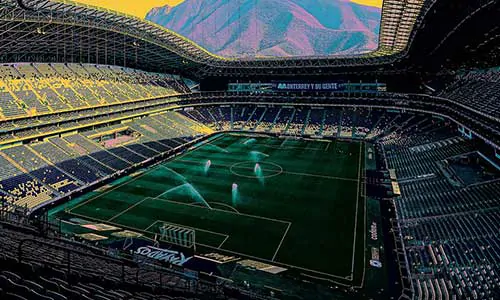
- Key Facts: Known locally as “El Gigante de Acero” (The Steel Giant), Estadio BBVA is famous for its stunning, asymmetric exterior structure. Consequently, fans are treated to spectacular, unobstructed views of the Cerro de la Silla mountain directly from the stands. It is widely considered one of the most visually stunning stadiums in North America.
14. Guadalajara Stadium (Estadio Akron)
- Location: Zapopan, Jalisco
- Tournament Capacity: 48,000
- Key Facts: Estadio Akron features a unique design meant to resemble a volcano, complete with grass-covered outdoor slopes and a white, floating ring canopy roof. This highly eco-friendly stadium provides a remarkably intimate atmosphere for spectators, with steep seating bowls that keep fans incredibly close to the action.
Canada Venues (2 Stadiums)
Additionally, this portion of the FIFA World Cup 2026 Stadium Guide: Locations, Capacities and Key Facts details Canada’s first-ever Men’s World Cup. Both Canadian host cities possess highly modern facilities designed to offer visiting fans a premium travel and match-day experience.
15. BC Place Vancouver
- Location: Vancouver, British Columbia
- Tournament Capacity: 54,000
- Key Facts: Located right on the edge of False Creek in downtown Vancouver, BC Place is an iconic facility that features a state-of-the-art, cable-supported retractable roof. The venue previously hosted the 2015 FIFA Women’s World Cup Final and has undergone rigorous upgrades to host the expanded men’s tournament in 2026.
16. Toronto Stadium (BMO Field)
- Location: Exhibition Place, Toronto, Ontario
- Tournament Capacity: 45,000
- Key Facts: Toronto Stadium stands as the most intimate and football-first venue of the entire tournament. To meet the minimum seating capacity of 45,000 required by FIFA, the stadium underwent major temporary seating expansions along its south and north stands. Its prime location near downtown Toronto makes it easily walkable for travelers.
Using the FIFA World Cup 2026 Stadium Guide: Locations, Capacities and Key Facts for Travel Planning
Planning travel across Canada, Mexico, and the United States can be an expansive undertaking. Therefore, utilizing a complete FIFA World Cup 2026 Stadium Guide: Locations, Capacities and Key Facts helps in identifying critical regional hubs and transit connections. Because of the sheer distance between cities, matches are divided into regional groupings—East, Central, and West—to reduce travel times for teams and fans alike.
For instance, if you are looking to catch matches in the Pacific Northwest, focusing your route on Seattle Stadium and BC Place Vancouver is highly logical due to their close geographical proximity. On the other hand, if you are planning to follow matches in the East, utilizing the high-speed rail corridor between Boston, New York/New Jersey, and Philadelphia can save both money and time.
Furthermore, weather patterns vary dramatically across the host cities in the summer months. While venues in Vancouver and Seattle offer cooler, coastal climates, southern host locations such as Dallas, Houston, and Monterrey experience extreme summer heat. Thankfully, most of these southern venues are equipped with either retractable roofs or modern climate control systems to ensure that player performance and spectator comfort are maintained at the highest level.
To keep track of the most up-to-date tournament details, you can consult the official FIFA tournament updates page, which offers real-time match scheduling, ticket distribution portals, and venue-specific guidelines as the tournament progresses.
Conclusion & Looking Ahead
The 2026 tournament represents a bold step forward for international soccer. By bringing together 48 nations across three vast host countries, the tournament celebrates diversity and global passion on an unprecedented scale. From the historical, high-altitude stage of Estadio Azteca to the cutting-edge innovations of MetLife Stadium, these 16 venues are set to deliver unforgettable moments for millions of fans worldwide.
Ultimately, keeping this FIFA World Cup 2026 Stadium Guide: Locations, Capacities and Key Facts bookmarked will help you navigate the matches, track seating configurations, and plan your travel routes efficiently. Whether you are traveling across the continent or tuning in from home, enjoying the world’s biggest tournament starts with knowing the grand stages where the action unfolds.
Are you planning to attend a match or follow your favorite team’s journey online? Share this guide with your fellow football fans, and make sure to secure your transit accommodations early to ensure a smooth World Cup experience!
Frequently Asked Questions (FAQs)
1. Which stadium has the largest capacity in the FIFA World Cup 2026?
Dallas Stadium (AT&T Stadium) in Arlington, Texas, has the largest capacity of the tournament, accommodating approximately 94,000 spectators for the matches.
2. Where will the FIFA World Cup 2026 Final match be played?
The final match of the tournament is scheduled to take place at the New York New Jersey Stadium (MetLife Stadium) in East Rutherford, New Jersey, on July 19, 2026.
3. Are all 2026 World Cup stadiums using natural grass?
Yes. To comply with strict FIFA regulations, all stadiums that normally use artificial turf (such as MetLife Stadium, Mercedes-Benz Stadium, and Lumen Field) have installed temporary natural grass systems for the competition.
4. Which stadium is hosting the opening match of the 2026 World Cup?
The historic Mexico City Stadium (Estadio Azteca) hosted the opening match on June 11, 2026, marking its historic status as the first venue to host matches across three different World Cups.
5. How many total host cities and stadiums are featured in the tournament?
There are a total of 16 host cities and 16 stadiums: 11 in the United States, 3 in Mexico, and 2 in Canada, all cooperating to host the expanded 48-team event.
6. Can I find all venues in this FIFA World Cup 2026 Stadium Guide: Locations, Capacities and Key Facts?
Yes, this guide covers all 16 official tournament venues across Canada, Mexico, and the United States, detailed with their updated tournament capacities and locations.