Football Formations Guide: From 4-4-2 to Today’s Tactical Systems
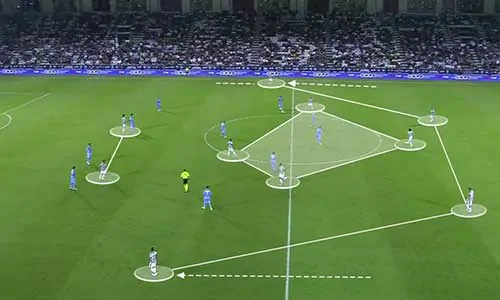
Table of Contents
- 1. Introduction to Tactical Evolution
- 2. An Overview of the Football Formations Guide: From 4-4-2 to Today’s Tactical Systems
- 3. The Foundation: Historical Context of Our Football Formations Guide
- 4. The Classic 4-4-2: The Rigid Masterpiece
- 5. The Rise of the Three-Man Midfield: 4-3-3 and 4-2-3-1
- 6. The Renaissance of the Back Three: 3-5-2 and 3-4-3
- 7. Modern Fluidity: Inverted Fullbacks and Box Midfields
- 8. Tactical Formations Comparison Table
- 9. Why Modern Managers Rely on This Football Formations Guide: From 4-4-2 to Today’s Tactical Systems
- 10. Frequently Asked Questions (FAQ)
- 11. Conclusion & Takeaways
Football is a continuously evolving canvas where tactical innovators constantly redesign spatial dynamics to gain a competitive edge. From the historic WM system of the early 20th century to the hyper-fluid shape-shifting setups of the modern era, the arrangement of players on a pitch has never been static. Consequently, understanding how these shapes operate is crucial for anyone wishing to dissect the nuances of the beautiful game. Whether you are an aspiring coach, a dedicated fan, or an analyst, keeping pace with these changes requires a detailed reference. This is why we have built this comprehensive Football Formations Guide: From 4-4-2 to Today’s Tactical Systems to help you understand the core mechanics of football tactics.
In the past, positions were rigidly defined, and players rarely strayed from their designated zones. However, today’s tactical landscapes demand multi-functional athletes who can rotate, invert, and adapt to multiple phases of play within seconds. Consequently, the traditional numbers we use to define formations have transitioned from rigid structures into fluid starting positions. By analyzing these transformations, we can better appreciate how modern managers outmaneuver their opponents on the pitch.
An Overview of the Football Formations Guide: From 4-4-2 to Today’s Tactical Systems
To fully appreciate how contemporary strategies are constructed, we must analyze the structural changes that occurred over the last few decades. This Football Formations Guide: From 4-4-2 to Today’s Tactical Systems highlights how space has become the ultimate currency in elite football. While early formations focused primarily on direct physical battles, modern systems prioritize positional play (Juego de Posición) and numerical overloads.
Furthermore, tactical evolution is not just about moving players around on a whiteboard. It is deeply connected to improvements in player athleticism, technological scouting, and Rule changes, such as playing out from the back during goal kicks. As a result, systems that were highly successful twenty years ago are now easily bypassed if they do not incorporate modern defensive and offensive principles. Understanding these adjustments is essential for anyone analyzing modern games.
The Foundation: Historical Context of Our Football Formations Guide: From 4-4-2 to Today’s Tactical Systems
To understand where we are going, we must first look back at where we started. For decades, the structural baseline of global football was characterized by balanced, predictable shapes. This historical baseline provides the perfect point of comparison for the highly complex systems deployed today by modern tacticians.
Specifically, the transition from the old-school 2-3-5 “Pyramid” to the structured 4-4-2 marked a massive shift toward defensive stability and balanced pitch coverage. Teams realized that protecting the central channel while maintaining wide outlets was the most efficient way to control games. In addition, the simplicity of these early structures allowed players to execute their roles with minimal tactical confusion, cementing these systems as the global standard for generations.
The Classic 4-4-2: The Rigid Masterpiece
The 4-4-2 formation remains one of the most iconic setups in football history. Characterized by two flat banks of four and two central strikers, it offers an incredibly balanced distribution of space across the pitch. Consequently, it became the default system for British and European football throughout the 1980s, 1990s, and early 2000s.
In this system, the roles were straightforward yet highly demanding:
- The Fullbacks: Focused primarily on defending their flanks, occasionally overlapping to support the wide midfielders.
- The Central Midfielders: Usually consisting of one defensive destroyer and one box-to-box engine to cover the massive central spaces.
- The Wide Midfielders (Wingers): Responsible for crossing the ball into the box and tracking back to support their fullbacks.
- The Two Strikers: Typically a “big man, small man” partnership, where one target man won aerial duels and the other exploited secondary balls.
However, despite its structural symmetry, the classic 4-4-2 possesses inherent flaws that modern managers quickly learned to exploit. Specifically, the flat midfield line often left a massive gap between the midfield and defensive units. In addition, when facing teams with a three-man central midfield, a two-man midfield in a 4-4-2 can easily find itself numerically overloaded, leading to a loss of possession and control.
The Rise of the Three-Man Midfield: 4-3-3 and 4-2-3-1
As managers sought to resolve the numerical disadvantages of the 4-4-2, the tactical paradigm shifted toward three-man midfields. This transition revolutionized how possession was kept and how defensive lines were protected. The two primary engines of this revolution were the 4-3-3 and the 4-2-3-1.
The Dominance of the 4-3-3
Popularized by Dutch Total Football and later perfected by Pep Guardiola’s Barcelona, the 4-3-3 uses a single defensive midfielder (the pivot) anchoring two creative central midfielders (the eights). This configuration naturally creates passing triangles all over the pitch. To study these structures further, analysts often refer to official resources like the FIFA Training Centre to understand how triangle patterns optimize ball progression.
Furthermore, the 4-3-3 introduced the concept of the “False Nine”—a striker who drops deep into midfield to drag opposing center-backs out of position. Consequently, this creates empty space for inside forwards to exploit. By prioritizing passing lines and positional rotations, the 4-3-3 systematically dismantled the rigid, flat lines of the 4-4-2.
The Balance of the 4-2-3-1
On the other hand, the 4-2-3-1 offers a more secure defensive foundation while retaining creative freedom in the final third. By utilizing a “double pivot” (two defensive midfielders), teams can shield their backline effectively. This layout grants the attacking midfielder (the classic “number 10”) the freedom to roam and create opportunities without worrying about defensive transition duties.
During the late 2000s and early 2010s, this formation became the blueprint for successful counter-attacking and possession-based teams alike. It offered a perfect bridge between the structural security of old-school setups and the fluid demands of modern tactical play.
The Renaissance of the Back Three: 3-5-2 and 3-4-3
Tactics operate in cycles. When three-man midfields and wide inside-forwards began dominating, innovative coaches responded by reviving three-man defensive lines. This tactical shift allowed teams to match up better against central overloads while retaining wide defensive coverage.
The Resilient 3-5-2
The 3-5-2 formation relies heavily on highly athletic wing-backs who cover the entire length of the pitch. When defending, these wing-backs drop deep to form a back five, closing down wide spaces. Conversely, during possession, they push high up the pitch to act as traditional wingers. This adaptability provides both numerical superiority in midfield and defensive solidity in the penalty area.
The Aggressive 3-4-3
Similarly, the 3-4-3 formation, utilized successfully by managers like Antonio Conte and Thomas Tuchel, focuses on creating wide overloads and rapid counter-pressing opportunities. By utilizing three central defenders, two wing-backs, two central midfielders, and three attackers, the team can press opponents aggressively from the front. If you want to dive deeper into official tactical frameworks and coaching structures, the UEFA Academy offers advanced materials on modern system implementations.
Modern Fluidity: Inverted Fullbacks and Box Midfields
Today, labeling a team’s formation by a single set of numbers can be highly misleading. Modern tactical systems are incredibly fluid, changing dramatically depending on whether a team is in or out of possession. The modern game is defined by phases of play rather than static positions.
Specifically, the concept of the “Inverted Fullback” has changed how teams build up from the back. Instead of running down the touchline, a fullback will drift inside during possession to sit alongside the defensive midfielder. This transformation temporarily changes a defensive 4-3-3 or 4-2-3-1 into an attacking 3-2-4-1 or 3-2-2-3, creating what analysts call a “box midfield” in the center of the pitch.
Furthermore, this tactical adjustment offers two major advantages:
- Central Superiority: By packing the central midfield with four players, teams can easily pass around opponents who utilize two- or three-man midfields.
- Counter-Pressing Rest Structure: Having multiple players positioned centrally allows the team to win the ball back immediately if possession is lost, preventing counter-attacks.
Consequently, players are no longer evaluated solely on their primary position. Instead, they must be comfortable playing in tight central spaces, defending wide areas, and making smart off-the-ball runs to maintain structural integrity.
Tactical Formations Comparison Table
To help you visualize the core differences detailed in this Football Formations Guide: From 4-4-2 to Today’s Tactical Systems, we have compiled a comparative table outlining the strengths, weaknesses, and key roles of each major system:
| Formation | Primary Strength | Key Weakness | Crucial Player Role |
|---|---|---|---|
| 4-4-2 | Excellent pitch coverage & structural simplicity | Vulnerable to central midfield overloads | Box-to-box midfielder |
| 4-3-3 | Natural passing triangles & possession control | Can be exposed on the counter if the pivot is isolated | The Single Pivot (No. 6) |
| 4-2-3-1 | Superb defensive protection & attacking flexibility | Demands high work-rate from wide players | The Attacking Midfielder (No. 10) |
| 3-5-2 | Strong central presence & defensive adaptability | Extreme physical demands on the flanks | Wing-Backs |
| 3-2-4-1 (Hybrid) | Incredible central superiority & counter-press setup | High risk of exposure in wide defensive channels | Inverted Fullback / John Stones role |
Why Modern Managers Rely on This Football Formations Guide: From 4-4-2 to Today’s Tactical Systems
Modern managers understand that relying on a single static formation is no longer viable at the elite level. Consequently, they use this structured understanding of spatial evolution to prepare their squads for various match scenarios. By training players to adopt different structures dynamically, managers can react instantly to an opponent’s tactical adjustments.
Furthermore, tactical flexibility acts as a tool to unlock stubborn low-block defenses. For instance, a team might start on paper in a 4-3-3 shape, but when attacking, they transition into a 2-3-5 to pin the opposition’s backline deep into their own box. This fluid approach makes it incredibly difficult for defending teams to assign marking duties, showing why understanding these tactical shifts is so valuable for modern analysis.
Frequently Asked Questions (FAQ)
To further clarify the dynamic world of football tactics, we have answered some of the most common questions regarding formation changes and implementation on the pitch.
Q1: Why did the classic 4-4-2 lose its dominance in modern football?
The 4-4-2 fell out of favor primarily because its two-man central midfield was easily bypassed by teams utilizing three-man midfields (like the 4-3-3). This led to a lack of possession control and created massive defensive gaps between the lines.
Q2: What is the main difference between a 3-5-2 and a 5-3-2?
The main difference lies in the starting position and mentality of the wing-backs. In a 3-5-2, the wing-backs are expected to stay higher up the pitch to support possession, whereas in a 5-3-2, they drop deeper into a defensive block, prioritizing protection over attacking output.
Q3: How does an inverted fullback affect a team’s attacking shape?
An inverted fullback drifts into the central midfield during the build-up phase. Consequently, this movement creates a temporary numerical overload in the center of the park, converting a standard back-four formation into a highly stable back-three structure.
Q4: What is the “False Nine” role in a 4-3-3 system?
A False Nine is a striker who drops deep into the midfield area instead of staying on the last shoulder of the defender. This movement drags opposing center-backs out of position, creating empty spaces for fast wingers or inside forwards to exploit.
Q5: Is there a “perfect” formation that dominates all others?
No, there is no single perfect formation. Every system has structural vulnerabilities. Successful managers choose shapes based on the specific profiles of their available players and the structural weaknesses of their upcoming opponents.
Q6: How do modern systems balance defense during a high-press transition?
Modern systems rely on structured “rest defenses.” By keeping a solid box or triangular structure behind the ball during attacks, teams can counter-press immediately when they lose possession, slowing down or completely stopping the opponent’s transition.
Conclusion: Embracing the Football Formations Guide: From 4-4-2 to Today’s Tactical Systems
Ultimately, football is a game of space, time, and numbers. As this Football Formations Guide: From 4-4-2 to Today’s Tactical Systems demonstrates, the sport has evolved from rigid positional assignments to highly complex, fluid systems designed to create and exploit space. While the classic 4-4-2 laid the groundwork for modern structural organization, today’s elite managers continue to push boundaries with hybrid roles, inverted players, and phase-dependent shapes.
For fans, understanding these tactical developments adds an entirely new dimension of enjoyment to watching matches. The next time you watch a game, try to look past the static graphics shown on television and focus instead on how the team’s shape changes as they transition from defense to attack. You might be surprised by the tactical chess match taking place right before your eyes.
What is your favorite tactical system, and how does your team deploy it? Leave a comment below or share this guide with fellow football enthusiasts to spark a tactical debate!